
Buy Guide
Metal Twin Over Full Bunk Beds: The Smart Choice for Growing Families
Metal Twin Over Full Bunk Beds: A Smart Choice for Growing Families
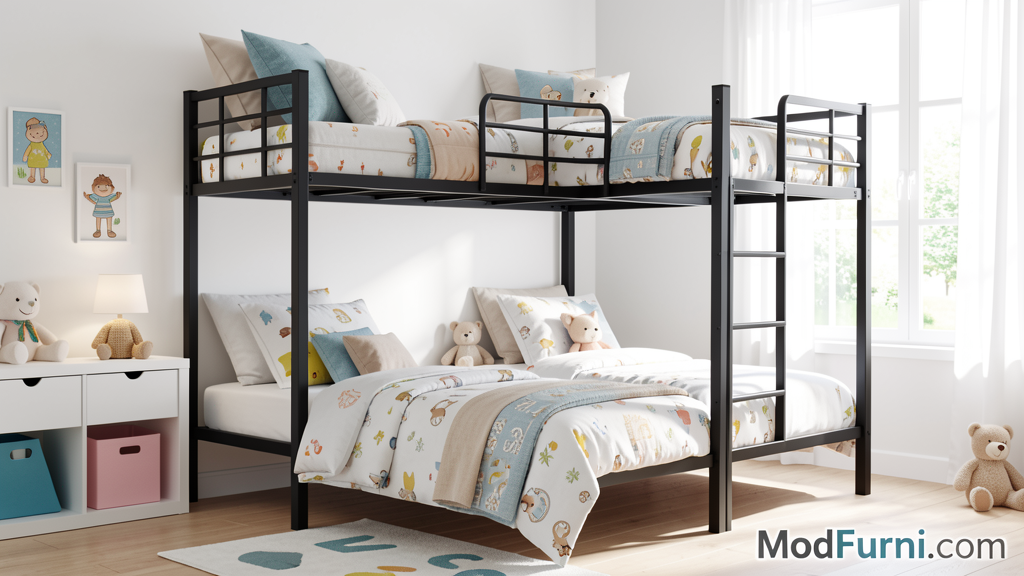
If you’re shopping for a bunk bed that actually works when your kids are at different ages, the metal twin over full bunk bed setup deserves a look. It solves a pretty common problem: the twin mattress on top works for a younger kid who’s outgrown the toddler bed, and the full mattress on the bottom gives an older sibling or teenager room to actually stretch out.
That one layout eliminates a lot of the space headaches families deal with every day. Here’s what you should know before buying one.
Why Twin Over Full Makes More Sense Than Twin Over Twin
Most bunk beds are twin over twin. That works fine when both kids are roughly the same size, but it gets tight once the older child hits a growth spurt. A full-size bottom bunk measures 54 inches by 75 inches — that’s 15 inches wider than a standard twin. For a growing kid, those extra inches make a real difference in sleep quality.
The top bunk stays twin-size, which is actually ideal for younger children. It feels more secure and the shorter drop to the mattress means less risk. Most manufacturers recommend the top bunk for kids ages 6 and up anyway, so the twin up top lines up with that safety guidance naturally.
What You’re Actually Getting with Metal Construction
Metal bunk beds have a reputation for being sturdy, and in most cases, that reputation is earned. Steel frame construction, when done properly, supports more weight than many wooden frames. A well-built metal twin over full bunk bed typically handles 200 to 250 pounds on the top bunk and 300 to 400 pounds on the bottom.
The main advantage of metal over wood is longevity. Wood frames develop squeaks as joints loosen over time. Metal frames with bolt-together construction stay tight longer, especially if you check the hardware every six months or so. Plus, metal holds up better against the wear and tear that comes with kids being kids — jumping, climbing, the usual stuff.
One thing to look for is the gauge of the steel tubing. Thicker is better. You want round or square tubing that’s at least 1 inch in diameter with a wall thickness of 1.2 mm or more. That’s the difference between a bed that lasts through one kid and a bed that lasts through all of them.
Safety Features to Check Before You Buy
Safety comes first with any bunk bed, and metal twin over full is no different. Here’s what to look for:
Guard rails on the top bunk. The top bunk needs guard rails on both sides. The U.S. Consumer Product Safety Commission recommends rails that extend at least 5 inches above the mattress surface. Some beds come with full-length rails, which is even better.
Ladder design and attachment. The ladder should be bolted to the frame, not just hooked on. Angled ladders are generally easier for kids to climb than vertical ones. Make sure the rungs have some texture so little feet don’t slip.
Weight limits. Check both bunks separately. The top bunk weight limit matters because that’s where your lighter child sleeps. The bottom limit needs to handle the heavier child plus sitting, reading, or just hanging out during the day.
Spacing between mattress and guard rail. There shouldn’t be more than a 4-inch gap between the mattress surface and the bottom of the guard rail. This prevents a child from rolling off or getting trapped.
Mattress fit. A mattress that’s too small leaves dangerous gaps. A mattress that’s too big won’t fit the frame right. Follow the manufacturer’s mattress thickness recommendations carefully. If you’re unsure about what type of support your mattress needs, check out our guide on mattress foundation vs box spring to understand the difference.
Assembly: What to Expect
Metal bunk beds generally assemble faster than wood ones. Most use a straightforward bolt-together system that doesn’t require glue or specialty tools beyond a basic socket set or the included Allen wrench.
That said, two people make the job easier. Holding a metal frame section in place while threading bolts is awkward alone. Plan for about an hour and a half if you have help, closer to two and a half if you’re doing it solo.
A tip: don’t overtighten the bolts during initial assembly. Snug them down, then go back after everything is square and aligned to do the final tightening. This keeps the frame from twisting during assembly and gives you a more stable finished product.
Room Planning and Space Considerations
A twin over full bunk bed takes up roughly the same floor space as two twin beds side by side, but only uses about half the floor area. The standard footprint is about 42 inches by 78 inches, depending on the model. That frees up room for a desk, dresser, or play area — which matters when two kids share a bedroom.
If ceiling height is a concern, you’ll want at least 8-foot ceilings for a comfortable fit. The full bed on the bottom sits lower than a standard bed frame, so there’s usually enough sitting room even with standard 8-foot ceilings. For the top bunk, the kid climbs up to sleep and climbs down for everything else, so sitting height matters less.
Weight Capacity: Matching the Bed to Your Kids
Weight limits matter more than most people realize. Here’s what you’ll typically see in well-made metal twin over full bunk beds:
| Bunk Position | Typical Weight Limit | Recommended Age |
|---|---|---|
| Top (Twin) | 200-250 lbs | 6 years and up |
| Bottom (Full) | 300-400 lbs | Any age |
The variation depends on the specific frame design and steel gauge. Some heavy-duty models can handle up to 400 pounds on the bottom bunk, which means an adult can sit or lie there comfortably for story time or tucking in.
Remember that weight limits include the mattress. A standard twin mattress weighs about 30 to 50 pounds, and a full mattress runs 50 to 70 pounds. Subtract those from the limit to figure out how much child weight the bed can handle.
Twin vs Full: Size Comparison
| Measurement | Twin | Full |
|---|---|---|
| Width | 38 inches | 54 inches |
| Length | 75 inches | 75 inches |
| Surface Area | 2,850 sq in | 4,050 sq in |
The full is 15 inches wider — that’s the difference between a kid who sleeps in one position and a teenager who sprawls out. Both are the same length, so height isn’t a factor in choosing between these two.
Styles and Finishes
Metal twin over full bunk beds come in several finish options. Black is the most common and hides scuffs and scratches better than lighter colors. White gives a cleaner look that works well in bright rooms. Silver or gray finishes are less common but can work in modern decor.
Some metal frames include built-in headboards and footboards with decorative details. Others keep it simple with straight lines and minimalist design. Neither is wrong — it really comes down to what fits the room’s style.
Frequently Asked Questions
Can adults sleep on the bottom bunk of a twin over full?
Yes, as long as the weight limit works for them. Most quality metal frames support 300 to 400 pounds on the bottom bunk, which covers most adults.
What mattress thickness works best for the top bunk?
Look for a mattress that’s 6 to 8 inches thick. Thicker mattresses reduce the effective height of the guard rail, which creates a safety concern. Stay within the manufacturer’s recommended range.
Do metal bunk beds squeak?
Generally less than wood bunk beds over time. Metal frames with bolted construction stay tight longer. If squeaks develop, checking and retightening the hardware usually solves the problem.
Can you separate a twin over full bunk bed into two beds?
Some models convert into two separate beds. Check the product specs before buying if this matters to you. Not all twin over full bunk beds offer this feature.
What’s the weight limit difference between metal and wood?
Metal frames generally have higher weight limits. A typical wood bunk bed might support 150 to 200 pounds per bunk, while metal frames often support 200 to 400 pounds depending on construction.
Final Thoughts
A metal twin over full bunk bed is one of those purchases that grows with your family. The twin top bunk works for the younger child today, and when they’re ready, the full bottom bunk is there for them tomorrow. Meanwhile, you’re not replacing furniture every few years as your kids get bigger.
Metal construction gives you durability that holds up through years of daily use, and the space savings are hard to beat when two kids share a room. Focus on safety features, check the weight limits against your family’s needs, and you’ll end up with a bunk bed that does its job well for a long time.