
Buy Guide
Daybed with Drawers: The Complete 2026 Buying Guide
Sep
Daybed with Drawers: The Complete 2026 Buying Guide
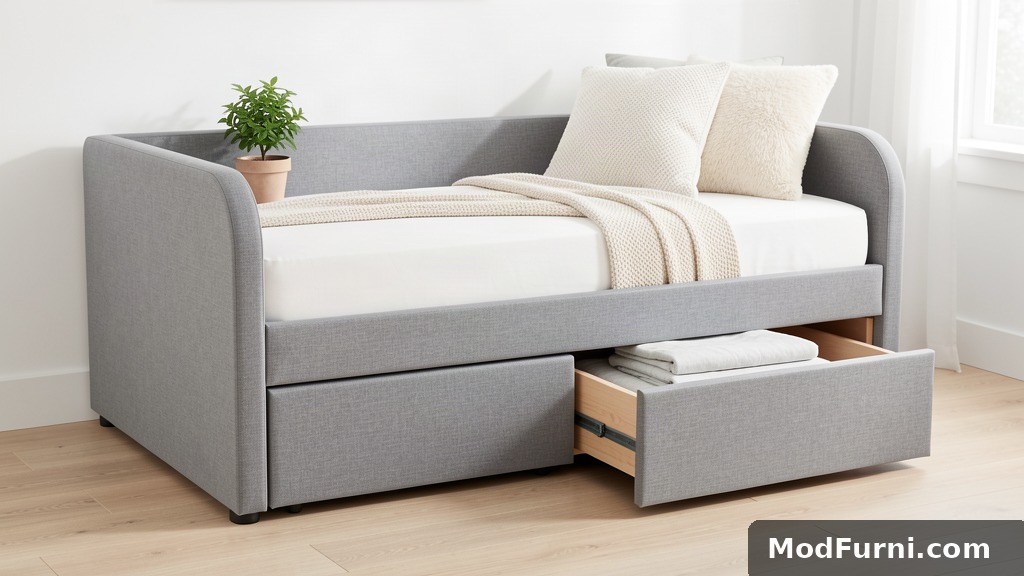
A daybed with drawers is a low-profile bed frame that doubles as a sofa during the day and hides built-in storage drawers beneath the sleeping surface. It lets one piece of furniture handle seating, sleeping, and clutter control at once, which makes it a favorite for guest rooms, kids’ rooms, and studio apartments across the United States.
Why a Daybed with Drawers Earns Its Keep
Most bedrooms are short on square footage, and the average American guest room measures under 120 square feet. A daybed with drawers attacks the two biggest problems in rooms like that: where people will sleep and where everything else will go. By day, it reads as a neat little sofa with a backrest; by night, it becomes a proper bed for a visitor. Meanwhile, the drawers underneath swallow extra bedding, off-season clothes, toys, or the stack of books that has been living on the floor.
Compare that with a regular twin bed frame and a separate dresser. You lose floor space to two pieces of furniture, and you pay twice. A twin daybed with drawers typically costs between $180 and $450, while a frame plus a small chest of drawers can easily run past $500 before you factor in delivery. For landlords, Airbnb hosts, and parents setting up a first apartment for a teenager, the math tends to make the daybed the obvious call.
Sizes, Dimensions, and Mattress Fit
Daybeds with drawers come in two dominant sizes: twin and full. A twin mattress measures 38 inches wide by 75 inches long, and a full mattress is 54 by 75 inches. Twin daybeds suit a single sleeper, a child, or a compact home office that occasionally becomes a guest room. Full-size daybeds give an adult more room to spread out, and they still fit neatly against a wall in a bedroom that is at least 10 by 10 feet.
Because the frame doubles as seating, the deck height matters more than it does on a regular bed. Look for a frame with a mattress deck roughly 14 to 18 inches off the floor. That range works for sitting down and standing back up comfortably, and it still leaves clearance for drawers that slide out underneath. Most daybeds are designed for mattresses 6 to 9 inches thick. A thicker 12-inch pillow-top mattress will sit too high above the backrest, which makes the daybed look off-balance and can defeat the guardrail’s purpose. Keep your mattress choice in the 6-to-9-inch band, and if you already own a deeper mattress, confirm the backrest height before you order.
Wood, Metal, or Upholstered
The frame material drives the look, the weight limit, and a big chunk of the price. Here is how the three main camps compare in 2026.
Solid Wood and Wood-Look Frames
Wood daybeds, usually built from pine, rubberwood, or engineered wood with a wood veneer, bring warmth to a farmhouse or transitional room. Solid pine frames in the $200 to $450 range are the sweet spot for most buyers, and brands like Zinus and Mellow have pushed clean, slatted designs to the front of the market. Quality wood frames carry a rating around 350 to 500 pounds, which is plenty for one adult or two kids. The trade-off is weight: a wooden daybed can run 80 to 120 pounds, so plan for a two-person assembly session.
Metal Frames
Powder-coated steel daybeds are the budget workhorses. Expect to pay $120 to $300, with Olee and DHP among the names you will see most. Steel frames often claim weight capacities from 500 up to 800 pounds, and their thin profiles make a small room feel less crowded. They are also the easiest to move when you rearrange. Watch for frames where the drawer glides are bolted directly to the side rails; that detail separates sturdy metal builds from the ones that wobble after a year.
Upholstered Frames
Linen, velvet, or faux-leather upholstered daybeds with drawers read as furniture rather than dorm gear. They cost more, typically $350 to $700 for a twin, and they add a soft backrest that makes daytime lounging genuinely comfortable. Novogratz and a handful of direct-to-consumer brands lead the style side of this category. The catch is maintenance: fabric-covered frames do not wipe down as easily as wood or metal, and pets with claws can do real damage to a linen skirt. If the daybed will live in a high-traffic family room, keep the fabric choice practical.
Drawer Details Worth Checking
Not all under-bed drawers are created equal, and this is the part of the spec sheet people skip until it is too late.
- Count. Two drawers is the standard on twin models, while full-size daybeds often carry two wider drawers or three narrower ones. Think about what you will store: three shallow drawers suit folded clothes, two deep ones suit bedding and blankets.
- Glides. Metal ball-bearing glides hold up far better than plastic side glides, which tend to warp in humid climates. Each drawer should feel smooth with a firm close, not a slam.
- Removable drawers. Some frames let you lift the drawers out entirely, which makes vacuuming under the bed and moving the frame much easier.
- Clearance. Measure the opening height. A drawer needs roughly 5 to 7 inches of vertical clearance to hold folded blankets without catching on the slats above it.
Drawer depth varies, but you can expect each twin-sized drawer to be about 20 to 24 inches deep, which swallows a surprising amount of stuff. For a real-world reference point, the popular wood twin daybed with two storage drawers, sold under the Mera brand on Amazon, uses solid pine and sits in the $200 range; you can check its current price here.
What to Check Before You Click Buy
Five details separate a daybed with drawers you will forget you own from one that annoys you weekly.
- Weight capacity and slat spacing. Look for a capacity of at least 300 pounds for a twin and 400 pounds for a full. Slats spaced no more than 2.75 inches apart support memory foam without sagging; if the frame uses wider spacing or a wire grid, your foam mattress may need a bunkie board.
- No box spring needed. Nearly all daybed frames sold today use slats, so skip the box spring and spend that money on a better mattress. If you are unsure whether your current setup needs a foundation, our comparison of mattress foundations and box springs walks through the difference.
- Guardrails. A daybed needs a backrest and usually a low side rail. If the frame is for a child under six, check that the rail is at least five inches above the mattress top.
- Assembly time. Most daybeds with drawers take one adult 45 minutes to two hours to build. Look for listings that state the number of boxes and whether all tools are included. Knock-down packaging matters if you are hauling it up stairs.
- Return policy and parts. Drawers take abuse, so buy from a seller that stocks replacement glides and will send parts rather than requiring a full return.
Where a Drawer Daybed Makes the Most Sense
Guest rooms are the classic home for this piece, but the list keeps growing. In a home office, a twin daybed with drawers gives you a place to nap and hides printer paper and files. In a kid’s room, it becomes a reading nook by day and a sleepover bed by night, with the drawers holding toys so they do not live in a pile on the rug. Studio apartments benefit most of all: one wall can host a sofa, a bed, and a storage system without a single extra piece of furniture.
If you are weighing a daybed against other space savers, two related guides on this site are worth a read. Our guide to picking an upholstered daybed covers fabric and frame choices in more depth, and the full-size daybed with trundle explainer is the right next stop if you regularly host more than one overnight guest and need the second sleep surface more than you need storage. For a corner-friendly layout that still offers drawers, some families prefer an L-shaped corner bed, which we cover in our queen-size corner bed guide.
And if drawer storage is your real priority rather than the sofa function, a loft bed with drawers or a dedicated storage bed frame might serve you better. ModFurni carries both styles, and the storage collection is worth browsing before you settle.
Budgeting for a Daybed with Drawers in 2026
Prices have stayed surprisingly stable over the last two years even with freight costs moving around. As a planning rule: budget metal frames run $120 to $250, solid wood models sit between $200 and $450, and upholstered versions land from $350 to $700. Twin sizes sit at the low end of each band, full sizes add roughly $50 to $100. Expect a quality daybed frame to last 10 to 15 years with normal use, so the per-night cost of even a $400 frame comes out to pennies once you spread it across a decade of guest stays and afternoon naps.
A few money-saving habits help. Shop the colorway that is on closeout, since manufacturers discount less popular finishes first. Compare the twin and full versions of the same frame; the full model is often a better value per square inch of sleep space if your room can take it. And check whether the listing includes the mattress, because some sellers bundle a 6-inch foam mattress and others do not, a difference of $80 to $150 that is easy to miss in the fine print.
Set Up and Care in Five Minutes
Once the frame is assembled, place it against the wall with the backrest flush, add a mattress that fits the deck, and let the drawers break in gently for the first week. Wood drawers may swell slightly in humid summers; if one sticks, rub the runners with a plain bar of soap or a candle stub rather than forcing it. Vacuum the drawer cavity twice a year, tighten the slat bolts after the first month (they settle as the mattress compresses), and check the glide screws each season. Fabric frames benefit from a monthly vacuum pass with an upholstery attachment, and wood frames only need a damp cloth and an occasional furniture polish.
A daybed with drawers is one of the few furniture purchases that quietly improves a room the moment it arrives, because it removes the need for the dresser you were also about to buy. Measure your wall, pick a frame material that matches how the room will actually be used, and let the drawers earn their keep from day one.