
Buy Guide
How to Choose the Best Twin Bed Frame for Your Room
Dec
When I start searching for a twin bed frame, I always look at my room first. I check how much space I have and where the bed will fit best. I think about comfort, safety, and what makes sense for my daily routine. Twin beds work well for adults who need to save space or stay within a budget. They also fit smaller-framed adults who cannot fit bigger furniture in their bedrooms. If I pick a frame for a child or teen, I consider storage and how easy it is to get in and out of bed. Each choice depends on who will use the bed and what they need most.
Table of Contents
Measure Your Room for a Twin Bed Frame
Room Size and Layout Tips
When I plan for a twin bed, I always grab a tape measure first. I want to make sure the bed fits without making the room feel crowded. I learned that a room should be at least 7 by 10 feet to fit a twin bed comfortably. If my room is smaller, I look for creative ways to arrange furniture. Sometimes, I push the bed against a wall or into a corner to save space. I also think about where the door swings and if there’s enough space to walk around.
Tip: I sketch a quick floor plan on paper. This helps me see where the twin bed will go and how much space I have left for other furniture.
Twin Bed Frame Dimensions and Height
I check the size of the twin bed frame before I buy. Most twin bed frames are between 40 and 44 inches wide and 77 to 81 inches long. If I want a longer bed, I look at twin XL frames. Here’s a table I use to compare:
| Bed Frame Type | Width (inches) | Length (inches) |
|---|---|---|
| Twin | 40-44 | 77-81 |
| Twin XL | 40-44 | 82-86 |
I also pay attention to the height of the frame. A low frame makes it easier for kids to climb in and out. A higher frame gives me space for storage underneath. I always think about comfort when I pick the height.
Ensuring Clearance and Accessibility
I want to move around my twin bed easily. I make sure there’s at least 36 inches of clear space on each side. This gives me room to walk, change sheets, and reach the nightstand. If I share the room or need wheelchair access, I leave extra space between beds. I always check that I have a clear path to both sides of the twin bed. This makes my room safer and more comfortable.
- Minimum clear floor space: 36 inches on each side of the bed
- Accessible route to each side of the bed
- Extra turning space for wheelchairs in shared rooms
I find that measuring and planning ahead saves me time and trouble. My twin bed fits well, and I enjoy my space every day.
Types of Twin Bed Frames
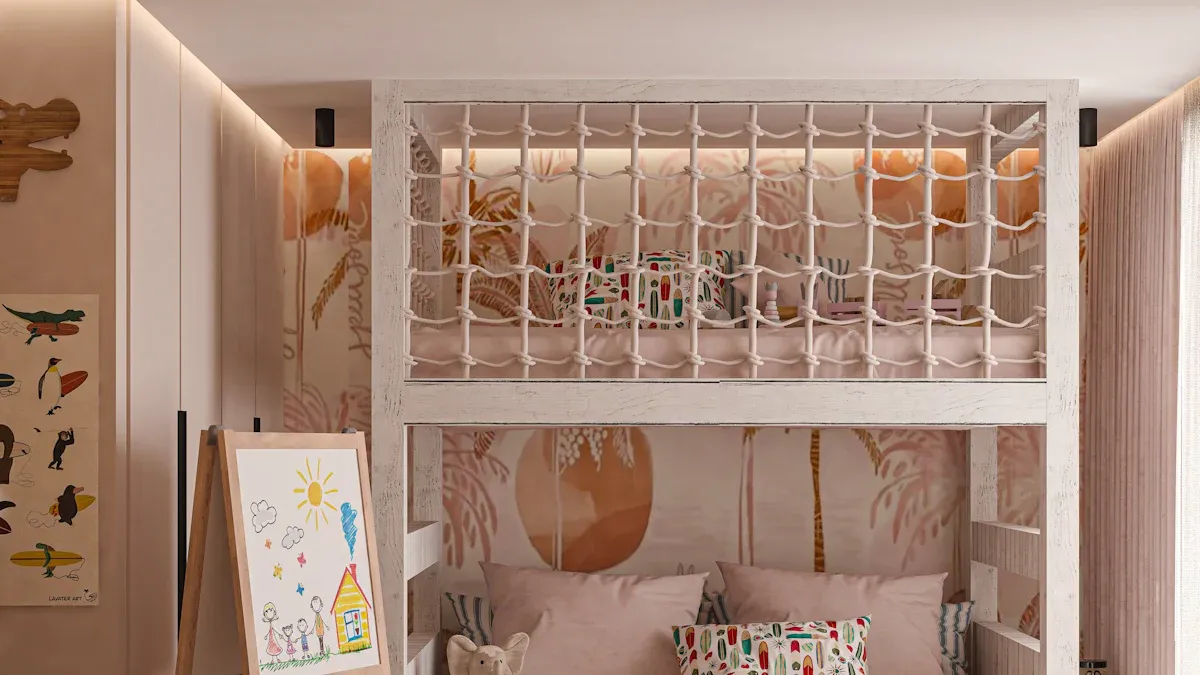
When I look at all the options for a twin bed, I see so many styles and features. Each type has its own strengths. I want to share what I have learned about the main types, their construction, and which ones work best for different needs.
Platform and Standard Frames
I often start with platform and standard frames when choosing bed frames. Platform beds sit low to the ground and use slats to support the mattress. I like that I do not need a box spring. Some platform beds even have storage drawers underneath, which helps in small rooms. Standard frames, like panel beds, use a headboard and footboard. They usually need a box spring. I find these frames easier to get in and out of, especially for kids or older adults.
Here is a table that helps me compare the main types and their features:
| Bed Frame Type | Key Features |
|---|---|
| Panel Beds | Four-sided frame with headboard and footboard; includes slatted foundation for breathability. |
| Sleigh Beds | Curved headboard and footboard; solid wood construction; includes wooden slats for mattress support. |
| Platform Beds | Low-profile design; slatted bed foundation; supports memory foam and hybrid mattresses; may include storage. |
| Bunk Beds | Two twin beds stacked; includes side rails and strong pillars for safety. |
| Daybeds/Trundle Beds | Resembles a couch; trundle bed offers an additional mattress underneath. |
| Four-Poster Beds | Tall pillars reaching the ceiling; can be wood or metal; includes canopy option for added privacy. |
I always check the material and construction before I buy. Solid wood frames last longer and feel sturdy. Metal frames are lighter and easy to move. I think about durability and comfort for daily use.
Here is a quick look at the pros and cons of platform and panel beds:
| Bed Frame Type | Advantages | Disadvantages |
|---|---|---|
| Platform Bed | – Avoids the cost of a box spring – Offers underbed storage – Available in modern designs – Low profile provides stability – Adequate airflow with slats | – Low height can make getting in and out difficult – Wooden frames may wear out over time |
| Panel Bed | – Various designs available – Easier to get in and out with a box spring – Box spring extends mattress life – Provides good support | – Increases cost with box spring – Box springs require maintenance and replacement – Generally classic styles may not suit modern designs |
Tip: If you want a modern look and extra storage, I suggest a platform bed. For a classic style and easy access, panel beds work well.
Bunk, Trundle, and Daybeds
When I need to save space or set up a shared room, I look at bunk beds, trundle beds, and daybeds. Bunk beds stack two twin beds on top of each other. This frees up floor space for play or study. I always check for safety rails and sturdy ladders. Trundle beds hide a second mattress under the main bed. I pull it out when I need an extra spot for a guest. Daybeds work as both a couch and a bed. I like using them in small rooms or guest spaces.
Here is a table that shows how these beds save space and add functionality:
| Bed Type | Space-Saving Feature | Functionality |
|---|---|---|
| Trundle | Provides an extra sleeping space that can be tucked away | Serves as a bed and can resemble a daybed |
| Daybed | Functions as both seating and sleeping area | Versatile for small spaces |
| Bunk Bed | Maximizes vertical space, freeing up floor area | Suitable for multiple sleepers but layout dependent |
I see that bunk beds and daybeds are very popular for kids and teens. They make the most of small rooms and shared spaces. Trundle beds help when friends sleep over or when I need a flexible guest bed.
- Bunk beds: Great for siblings or sleepovers. Always check for strong guardrails.
- Trundle beds: Perfect for sleepovers or guests. Easy to slide out and tuck away.
- Daybeds: Work as a sofa during the day and a bed at night. I use them in home offices or small bedrooms.
Best Beds for Twins: Pros and Cons
When I set up a room for twins or siblings, I look at all the options. Some layouts work better than others. I want to make sure each child has their own space and comfort. Here is a table that helps me compare the best beds for twins:
| Bed Type | Pros | Cons |
|---|---|---|
| Interlocking Beds | Relatively space saving; would work at any height | One bed could end up superior to the other; changing sheets could be awkward |
| Traditional Twin Beds | Plenty of choice (no DIY required); feeling of ownership and privacy | Can look like a dormitory; direct eye contact may not help littles to sleep |
| Bunk Beds | Space saving; sleeping on top is awesome; fun ways of climbing up and down | Sleeping on the bottom is generally considered inferior to the top; young children may not be safe up top; changing sheets on the top is not fun |
| Corner Junction Beds | Bedtime stories made easy; the corner junction creates a handy shelf | Room has to be deep enough for the length of the bed and the corner unit; pointy corner near pillows |
| End to End | Siblings can choose to be close or not; everyone is close to the ground | Without a headboard there could be pillow breach in the middle; many bedrooms will not be long enough for this layout |
I always think about safety, comfort, and how easy it is to change sheets. For young kids, I avoid top bunks. For teens, I let them help pick the style. I also look for options with storage or multi-functional features, like drawers or shelves.
Note: Space-saving beds like bunks and daybeds are top choices for small rooms, dorms, and apartments. I love how they combine function and style.
When I choose a twin bed frame, I focus on the features that matter most for my family. I check the material, construction, and durability. I want a bed that fits the room, meets our needs, and lasts for years.
Material, Quality, and Safety
Metal vs. Wood Twin Bed Frames
When I pick a twin bed, I check the material first. Most twin bed frames are made from wood or metal. Wooden frames, like oak or walnut, feel strong and look cozy. They last a long time if you care for them. Metal frames, made from steel or iron, are lighter and easy to move. They do not attract bugs and usually cost less. Metal frames are simple to clean. Wood needs more care to stay nice. If I want my room to feel warm, I choose wood. If I want a modern style and easy cleaning, I pick metal.
| Material | Durability Impact | Additional Notes |
|---|---|---|
| Wooden Bed Frames | High-quality wooden frames often have a longer lifespan and can be sourced sustainably. | They provide warmth and sturdiness but are heavier and may require more investment. |
| Metal Bed Frames | Generally lightweight and resistant to pests, but some may produce noise over time. | They are often more affordable and suitable for modern designs, but their aesthetic may not suit all. |
| Upholstered Bed Frames | May not have the same longevity as wood or metal in high-use environments. | They offer luxury and comfort but require more maintenance to keep clean. |
Sturdiness and Build Quality
I want my twin bed to last a long time. I check how well it is built. I look at welds on metal frames and joints on wood frames. Smooth welds and thick steel mean the frame is strong. Tight joints and solid slats show good wood quality. I shake the frame gently to test it. If it wobbles or creaks, it might not last. I also check the paint or stain. Even color protects the frame and keeps it looking new. A strong twin bed frame helps my mattress last longer.
| Factor | High-Quality Frame | Low-Quality Frame |
|---|---|---|
| Weld Quality | Smooth, even welds | Uneven, rough welds |
| Steel Thickness | Consistent, thicker steel | Thin, bendable steel |
| Coating Finish | Even powder-coat, no chips | Patchy paint, easy to rust |
| Hardware | Strong bolts, reliable screws | Cheap fasteners, loose fit |
- Look at welding and frame thickness.
- Check material thickness and welds.
- Make sure support slats are strong.
Safety Features for Kids and Adults
Safety is very important, especially for kids. I look for frames with rounded edges and pads to stop bumps. Stabilizing straps keep the bed steady. Zipped-in coverlet sheets add comfort and safety. Reflective zipper tabs help me see the bed at night. For special needs, I pick medical grade fabrics. I always check for safety labels like ASTM or CPSC. These show the bed meets safety rules. With these features, I know my twin bed is safe for everyone.
| Safety Feature | Description |
|---|---|
| 2 Zipped-In Coverlet Sheets | Provides additional comfort and safety. |
| Frame Pads | Protects against sharp edges. |
| Stabilizing Straps | Ensures the bed remains secure. |
| Reflective Zipper Tabs | Enhances visibility for safety. |
| Medical Grade Fabrics | Ensures durability and safety for users with special needs. |
Tip: Always look for safety labels and test the frame for strength before you buy.
Style, Storage, and Budget
Matching Twin Bed Frames to Room Decor
When I want my room to look great, I always match my twin bed to the rest of my decor. I look at the style of the frame first. Here are some popular styles I see:
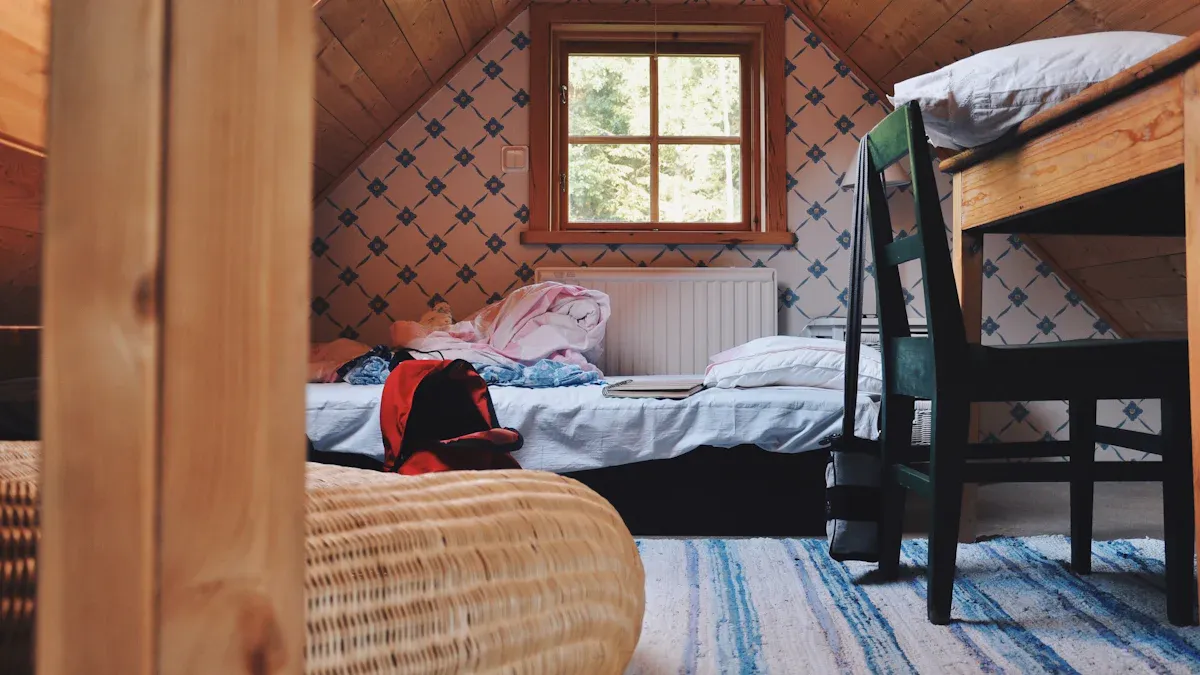
- Wooden bunk beds work well in country or vintage rooms. They feel cozy and private, which is perfect for kids or teens.
- Metal bed frames give a modern or industrial vibe. I like pairing them with fun bedding for a playful look.
- Canopy beds add elegance and warmth. I sometimes hang sheer curtains or string lights for a classic touch.
- Four-poster beds make a room feel grand or cozy, depending on the size.
- Wicker headboards bring rustic charm, especially in small rooms with mirrors to brighten things up.
To pull the room together, I use matching headboards and layer bedding in similar colors. I also like to put a single rug under both beds if I have twins sharing a room. I keep throw pillows to a minimum and add a textured throw at the foot for comfort.
Storage and Multi-Functional Features
In a small room, I need my twin bed to do more than just give me a place to sleep. Storage beds help me keep my space tidy. These beds have drawers or compartments built in, so I can store bedding, clothes, or toys. This keeps my room organized and clutter-free. I also look for multi-functional features, like a Murphy bed that folds away when I need more floor space. Some beds even work as a sofa during the day. These options make my room feel bigger and more useful.
| Benefit | Description |
|---|---|
| Space Efficiency | Murphy beds free up floor space when folded away. |
| Versatility | Some beds work as both a couch and a bed. |
| Cost-Effectiveness | Multi-functional beds save money compared to adding more rooms. |
| Aesthetic Appeal | Many beds blend in with modern decor and add style. |
| Ease of Operation | New designs make folding and unfolding the bed simple. |
Setting a Budget and Finding Value
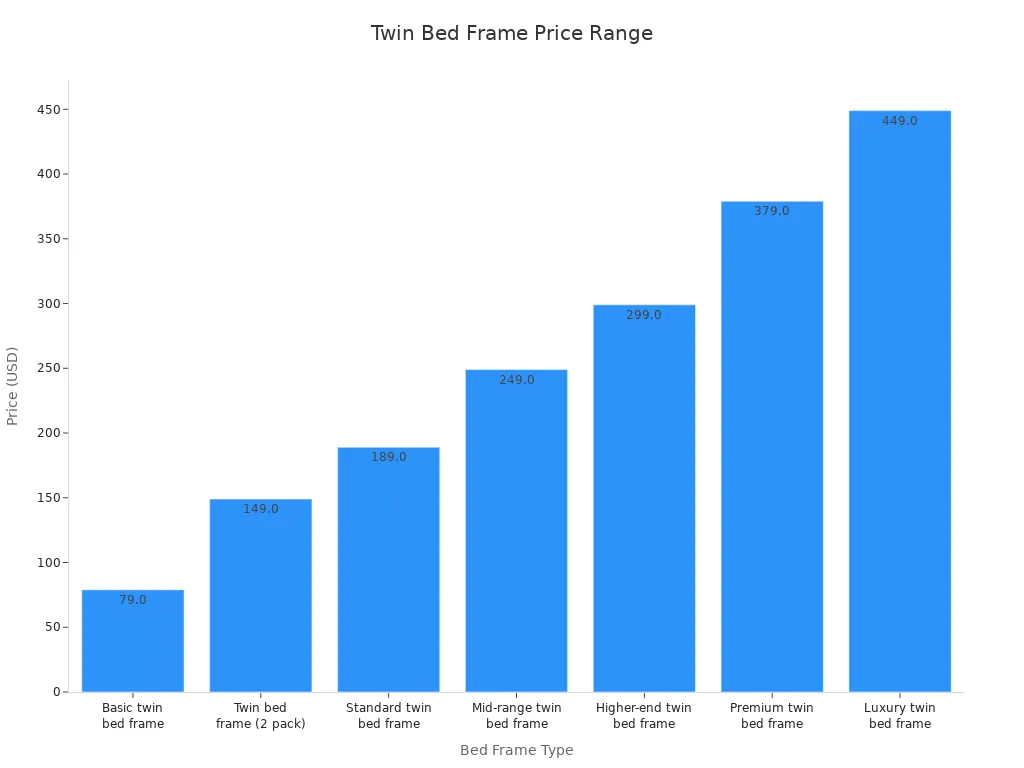
I always set a budget before I shop for a twin bed frame. Prices can vary a lot, especially if I want extra features like storage. Here’s a quick look at what I might spend:
| Price Range | Description |
|---|---|
| $79.00 | Basic twin bed frame |
| $149.00 | Twin bed frame (2 pack) |
| $189.00 | Standard twin bed frame |
| $249.00 | Mid-range twin bed frame |
| $299.00 | Higher-end twin bed frame |
| $379.00 | Premium twin bed frame |
| $449.00 | Luxury twin bed frame |
I look for value by comparing features and quality. Sometimes, a mid-range bed with storage gives me the best mix of comfort and function. I always check if the options fit my needs and my budget before I decide.
Final Checklist for the Best Twin Bed Frame
Review Your Priorities and Space
When I get close to making a decision, I like to pause and review my priorities. I ask myself what matters most. Do I need extra storage? Is style important? Will the twin bed fit my room without crowding it? I look at my daily routine and think about who will use the bed. If I am buying for a child, I focus on safety and easy access. For a guest room, I want something that looks good and feels comfortable.
I use this table to help me compare the most important factors before I choose:
| Factor | Description |
|---|---|
| Design | I pick from styles like wood, metal, or upholstered frames. I check for features like storage. |
| Price | I compare prices. Wood frames usually cost more than metal. Design and material affect the price. |
| Ease of Assembly | I look for simple designs with clear instructions. Sometimes I ask about in-home setup services. |
| Noise | I want a frame that stays quiet. Good materials and proper assembly help reduce squeaks. |
| Type | I think about platform, canopy, or sleigh beds. I choose what fits my style and needs. |
Double-Check Measurements and Features
I always double-check my measurements before I buy a twin bed. I measure my room again and make sure the bed will fit. I check the height and length of the frame. I want enough space to walk around and change sheets. I also look at the features that come with each option. Storage drawers, trundle beds, and sturdy slats make a big difference in how useful the bed will be.
Here is my step-by-step checklist to make sure I cover everything:
- Measure the room size and layout. I want the twin bed to fit without blocking doors or windows.
- Match the style of the bed frame to my room decor.
- Pick a material that looks good and lasts a long time.
- Look for extra features like storage or trundle options if I need them.
- Make sure the frame supports my mattress type and thickness.
- Check for strong construction and safety features, especially for kids.
Tip: I always bring my measurements and a list of must-have features when I shop. This helps me avoid mistakes and find the best option for my space.
Where to Shop and What to Ask
When I am ready to shop, I look at both online stores and local furniture shops. I compare prices and read reviews. I ask questions to make sure I get the right twin bed for my needs. Here are some questions I always ask before I buy:
- What size bed frame do I need?
- What materials are used in the frame?
- How easy is the assembly process?
- What is the pricing and warranty policy?
- Does the frame support the type of mattress I own?
I talk to sales staff and read product descriptions carefully. I check if the store offers delivery or assembly services. I look for a good warranty in case something goes wrong. I want to feel confident that I am making the best choice for my room and my budget.
Note: I never rush my decision. I take my time, ask questions, and compare options. This way, I know I am getting a twin bed that fits my needs and lasts for years.
When I pick a twin bed frame, I always remember these steps:
- Measure my space first.
- Pick a material that fits my style—wood for warmth or metal for a modern look.
- Choose a design that matches my room.
- Make sure the frame gives strong support for my mattress.
- Stick to my budget and look for storage if I need it.
I use my checklist before I buy. This helps me feel sure about my choice. You can find the perfect twin bed frame for your room, too!
FAQ
What size mattress fits a twin bed frame?
I always use a mattress that measures about 38 inches wide and 75 inches long. Twin XL frames need a mattress that is 80 inches long. I check the frame specs before I buy.
How do I choose the best twin bed frame for a small twin bedroom?
I measure my space first. I pick a frame with built-in storage or a low profile. I push the bed against a wall to save space. I look for multi-functional designs.
Can adults use twin bed frames comfortably?
I sleep well on a twin bed frame if I do not need extra room. Twin beds work for smaller-framed adults or guest rooms. I check the weight limit and sturdiness before I buy.
Are bunk beds safe for young children?
I avoid top bunks for kids under six. I look for strong guardrails and sturdy ladders. I test the frame for stability. Safety labels help me feel confident.
What tools do I need to assemble a twin bed frame?
I usually need a screwdriver and a wrench. Some frames include tools in the box. I read the instructions first and lay out all the parts before I start.
Tip: I keep extra screws and bolts handy in case I lose any during assembly.