
Buy Guide
How to Pick the Perfect Queen Bed Frame for Your Space

Dec
I know picking the right queen bed frame can feel overwhelming. I’ve struggled with finding one that fits my space and matches my style. A great frame changes the whole room. It can add storage, make things look cozy, and become the main feature. You deserve that perfect fit!
Table of Contents
Choosing a Queen Bed Frame
Room Size and Layout
When I started looking for a queen size bed, I realized the first thing I needed to do was measure my room. A queen size bed is 60 inches wide and 80 inches long. That sounds simple, but it can take up more space than you think. I made the mistake once of not checking my room size. My bed ended up crowding everything else.
Here’s what I learned:
- Always measure both your mattress and your room before you shop.
- The recommended minimum room size for a queen size bed is about 10 by 11 feet. If you want extra space for a closet or desk, aim for 12 by 12 feet or even 12 by 14 feet.
- You need at least 24 inches of walking space on three sides of the bed. In bigger rooms, 30 inches feels even better.
- In a rectangular room, I like to put the headboard against the longest wall. This makes the room feel balanced and leaves space to walk around.
- For square rooms, centering the bed looks neat and organized.
- If your room has low ceilings, it can feel tight. I use mirrors and light colors to make my space look bigger.
Tip: Don’t let a glamorous bed frame overpower your room. Proportion matters more than fancy details.
Mattress Support and Compatibility
I used to think any bed frame would work with any mattress. I was wrong. The right support system makes a huge difference in comfort and how long your mattress lasts. If you want to sleep well and avoid back pain, you need to pick the right foundation.
Some popular support systems for queen size beds include:
- Platform bases
- Box springs
- Slatted frames
- Designer foundations like the Purple Light Gray Foundation or Avocado Green Foundation
- Heavy-duty frames such as the Knickerbocker HD Frame or EnGauge Bed Support System
Proper support keeps your spine aligned and reduces pressure points. I noticed I slept better and woke up with less pain when I used a sturdy frame. If you don’t have enough support, your mattress can sag and wear out faster. That means less comfort and more money spent on replacements.
Style and Decor Match
I love how a bed frame can change the whole look of a bedroom. When I wanted to select the most suitable frame for my space, I thought about my style and what would match my decor. Here’s a quick guide I made to help you match different bed frame styles with your favorite themes:
| Bed Frame Style | Matching Decor Themes |
|---|---|
| Platform | Minimalist, Modern, Scandi, Industrial |
| Panel | Transitional, Classic, Contemporary |
| Upholstered | Post-modern Luxe, Modern Minimalist |
| Storage | Compact, Contemporary |
| Canopy | Traditional, Contemporary, Japandi, Industrial |
| Bunk | Versatile, Playful, Space-saving |
If you like a clean and simple look, platform beds work well. For a cozy, classic feel, panel beds are great. Upholstered frames add a touch of luxury. Storage beds are perfect if you need extra space. I always try to choose a queen size bed that fits my style and doesn’t make the room feel crowded.
Practical Features
When I pick a bed frame, I look for features that make life easier. Storage options are a lifesaver in small rooms. I can keep extra blankets, pillows, or even out-of-season clothes right under my bed. This keeps my room tidy and saves closet space.
Noise-free designs are another must-have for me. I hate when my bed squeaks every time I move. A sturdy, well-built frame stays quiet and helps me sleep better.
Here’s a table that shows how storage and noise-free features can help:
| Benefit | Description |
|---|---|
| Maximizes storage potential | Great for small spaces, adds storage without extra furniture |
| Easy access to items | Keeps things like blankets or shoes within reach |
| Organizes linens | Makes it simple to find and change bedding |
| Reduces clutter | Helps keep your room neat and organized |
| Adapts to living situations | Useful if you move to a smaller place in the future |
I also check for durability and easy cleaning. I want a frame that lasts and doesn’t take hours to wipe down. If you have pets or kids, this matters even more.
Note: Always check the frame’s weight limit and assembly instructions. Some frames are easier to put together than others.
Choosing the right queen bed frame means thinking about space, support, style, and features. When I take the time to plan, I end up with a bed that looks great and feels even better.
Measure Your Bedroom Space
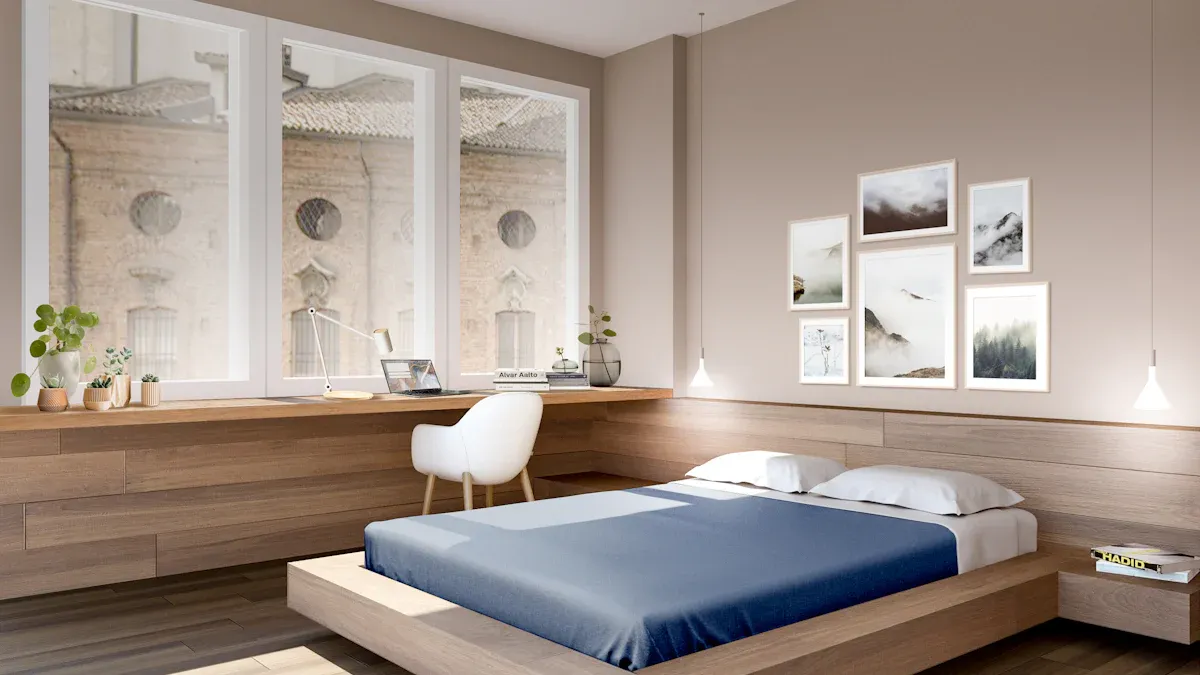
How to Measure for a Queen Size Bed
When I want to choose a queen size bed, I always start with careful measuring. I grab my tape measure and check the length and width of my bedroom. I find it helps to mark the outline of a queen size bed on the floor with painter’s tape. This gives me a real sense of how much space the bed will take up. A queen size bed usually measures about 60 inches by 80 inches, or 120 centimeters by 190 centimeters. I like to see the tape on the floor before I move any furniture.
Here’s what I do to avoid mistakes:
- I double-check my measurements so I don’t end up with a bed that doesn’t fit.
- I make sure the mattress will fit snugly in the frame. If it’s too tight, it can damage the edges. If it’s too loose, the mattress might slide and reduce comfort.
- I always allow a buffer of about 24 to 30 inches (60 to 75 cm) around the bed for walking space.
Tip: Accurate measuring helps me pick the right foundation and keeps my room comfortable.
Allowing for Movement and Furniture Placement
I want my bedroom to feel open, not cramped. I always plan for enough space to move around the queen size bed. I leave at least 24 inches of clearance on each side. This makes it easy to get in and out of bed, even if I have nightstands or a wardrobe nearby.
Here’s a quick checklist I use:
- Leave 24 inches of space on each side of the bed.
- Make sure nightstands fit (they’re usually 16 to 20 inches wide).
- Check that closet doors and drawers can open fully.
- Walk around the taped outline to see if the space feels right.
If I skip these steps, I risk bumping into furniture or feeling crowded. Careful planning helps me enjoy my queen bed frame and keeps my room looking neat.
Queen Size Bed Foundation
Platform, Box Spring, or Slats
When I started to choose a queen size bed, I got confused by all the foundation options. I wanted my queen size bed to feel sturdy and last a long time. I learned that the foundation affects comfort and how well my mattress holds up. Here’s a table that helped me compare the main types:
| Foundation Type | Pros | Cons |
|---|---|---|
| Slat Foundations | Affordable, Durable, Easy assembly, Airflow | Possible sagging, Possible shifting |
| Box Springs | Added height, Possible bounce | Difficult to move, Heavy, Lack of support |
I found that slat foundations let air flow under the mattress. This keeps things fresh and helps prevent moisture. Box springs give extra height and a little bounce, but they can be heavy and hard to move. Most box springs today just add height and don’t give much support.
Tip: A good foundation keeps your mattress flat and firm. It also makes it easier to get in and out of bed.
Mattress Compatibility
I always check if my mattress matches the foundation. Most queen bed frames work with memory foam, hybrid, latex, and innerspring mattresses. Here’s a quick table I use:
| Mattress Type | Compatibility with Queen Bed Frames |
|---|---|
| Memory Foam | Yes |
| Hybrid | Yes |
| Latex | Yes |
| Innerspring | Yes |
If I use the wrong mattress, I notice poor support and more motion transfer. Sometimes the mattress sags or wears out too fast. I want my queen size bed to last, so I make sure the foundation fits. Using the right setup keeps my warranty safe and helps me sleep better.
- Foundations help prevent sagging and damage.
- Good airflow keeps my mattress dry and clean.
- The right match gives me comfort and support every night.
Queen Bed Frame Style
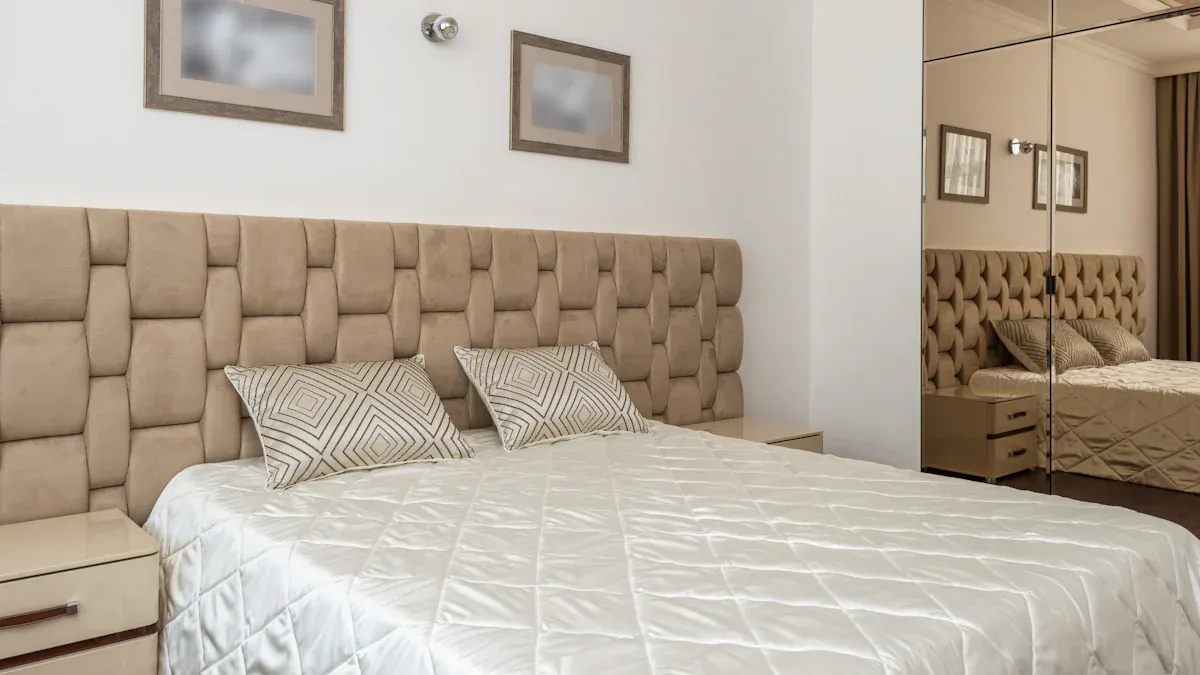
Modern vs. Classic Designs
When I look for a new queen bed frame, I always think about the style first. I notice that younger people often like modern and unique designs. They want something that looks cool and also works well. Older folks, like my parents, usually pick classic styles. They care more about comfort and want a bed that feels timeless. I also see that where you live can change your taste. In Europe, many people like simple and eco-friendly beds. In Asia, I find more beds with fancy details and cultural touches. I try to pick a style that fits my age, my needs, and my room.
Material and Color Choices
The material of the bed frame makes a big difference in comfort and how long it lasts. I love wooden frames because they feel warm and sturdy. Hardwoods like oak and walnut can last for decades if I take care of them. Metal frames cost less and look sleek, but sometimes they make noise after a while. I always check if the frame supports my mattress well. This helps my queen size bed stay comfy and keeps my body in good shape.
When I want to select the most suitable frame, I also think about color. Here’s what I keep in mind:
- Room’s color scheme: I match or contrast the bed with my walls and furniture.
- Personal style: I choose a color that shows who I am, bold or simple.
- Mood and atmosphere: Colors change how a room feels. Soft colors make it calm, while bright colors add energy.
Picking the right style, material, and color helps me enjoy comfort and makes my bedroom feel just right.
Queen Bed Frame Features
Storage Options
When I pick a queen bed frame, I always look for smart storage. Drawers under the bed or lift-up platforms help me keep my room tidy. I store extra blankets, shoes, or books right under my queen size bed. This makes my space feel bigger and less cluttered. I love how easy it is to grab what I need without searching through my closet. Storage beds work great in small rooms or apartments.
Noise-Free Design
I hate waking up because my bed squeaks. I learned that the way a bed frame is built matters for comfort and silence. Here’s what I check:
- Solid joints and reinforced corners keep the frame steady.
- Hardwoods like oak or maple don’t squeak as much as soft woods.
- Metal frames with tight fittings stay quiet.
- Platform beds with solid bases or closely spaced slats help stop movement and noise.
If I want a peaceful night, I always choose a frame with these features. Good construction means better sleep and more comfort.
Durability and Maintenance
I want my bed to last for years. I check the material and how easy it is to clean. Here’s a table that helps me decide:
| Material Type | Maintenance Requirements |
|---|---|
| Metal | I clean it often to stop rust. I check joints so they don’t wear out. |
| Wooden | I dust it and keep it dry so it doesn’t warp. |
| Upholstered | I vacuum and spot clean to keep it fresh and looking nice. |
I always pick a queen bed frame with strong materials and simple care steps. This saves me time and keeps the quality high. If I have pets or kids, easy cleaning matters even more.
Tip: I check if the frame is easy to move and put together. This helps when I want to rearrange my room or clean under the bed.
Final Tips and Checklist
Shopping Checklist
When I shop for a queen bed frame, I always use a checklist. This helps me stay organized and avoid missing anything important. Here’s what I look for:
- Measure my space 🏠
I double-check the room size and make sure the bed will fit. - Check mattress compatibility
I match the frame with my mattress type. - Pick a style I love
I choose a design that fits my taste and room decor. - Look for storage options
I decide if I need drawers or lift-up storage. - Test for noise-free design
I check reviews and ask about squeaks. - Review durability and maintenance
I pick strong materials and easy-to-clean surfaces. - Read assembly instructions
I make sure I can put it together without trouble. - Check the weight limit
I confirm the frame can support my mattress and me.
Tip: I always bring my checklist when I visit stores or shop online. This keeps me focused and confident.
Common Mistakes to Avoid
I’ve made a few mistakes when buying bed frames(Check in Amazon). I want to help you skip those problems. Here are some things I watch out for:
- Forgetting to measure the room before buying.
- Picking a frame that doesn’t match my mattress.
- Ignoring the need for storage in small spaces.
- Choosing style over comfort.
- Overlooking assembly difficulty.
- Not checking the frame’s weight capacity.
- Skipping reviews about noise or durability.
If I avoid these mistakes, I end up with a bed frame that fits my space and my life. I feel happier with my choice and sleep better every night.
I always start by measuring my space, checking mattress support, and picking a style I love. I use my checklist every time I shop. It helps me feel confident. You deserve a bedroom that feels cozy and looks great. Enjoy your new queen bed frame!
FAQ
What size mattress fits a queen bed frame?
I always use a mattress that measures 60 inches wide and 80 inches long. This size fits every queen bed frame I have tried.
How do I keep my bed frame from squeaking?
I tighten all the screws and check the joints often. Sometimes, I add felt pads or a little oil to stop any noise.
Can I assemble a queen bed frame by myself?
I usually build my bed frame alone. I read the instructions first. If the frame feels heavy, I ask a friend for help.