
Buy Guide
Kids Loft Bed Guide: Safety, Sizes, and Top 2026 Picks
Oct
Kids Loft Bed Guide: Safety, Sizes, and Top 2026 Picks
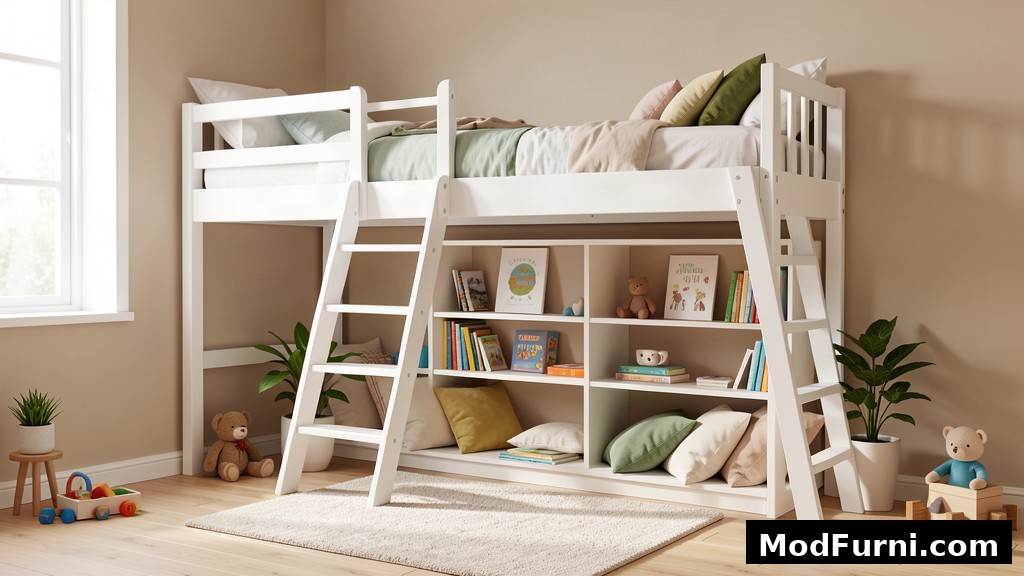
A kids loft bed is a raised bed frame built for children that lifts the mattress on a sturdy frame and opens the floor beneath it for play, study, or storage. It uses guardrails and a ladder for safe climbing, making it ideal for small bedrooms that need to sleep and store in the same footprint.
If you are shopping for a child’s room in 2026, the loft bed is the single most space-efficient piece of furniture you can buy. A twin loft bed reclaims roughly 30 square feet of floor that a standard bed frame permanently occupies, and that reclaimed square footage is exactly where homework desks, toy bins, and reading nooks end up. This guide covers what a kids loft bed costs, which sizes and heights work in real rooms, the safety numbers that matter, and four solid picks you can order today.
Why a Kids Loft Bed Beats a Standard Bed Frame
A conventional twin bed frame sits on the floor and gives you one usable layer: the mattress. A kids loft bed stacks two functions in the same footprint. The sleeping surface moves up, and the floor underneath becomes usable space. In a 10 by 10 foot bedroom, that trade is the difference between a room that fits a desk and a room that does not.
Three practical advantages show up again and again in parent reviews:
- Storage without a dresser. Under-bed space holds bins, books, and seasonal clothing, which removes the need for an extra chest of drawers.
- A dedicated play or study zone. A low loft bed with 30 to 36 inches of clearance can hold a small desk, a beanbag chair, or a play kitchen.
- Novelty that makes bedtime easier. Beds with ladders and slides convert a chore into something children actually want to use.
Loft beds also fit awkward layouts. A bed that rises vertically can be placed against a wall where a full bunk bed would block a closet door or a window. That is why loft designs outsell traditional bunks in rooms under 120 square feet.
Kids Loft Bed Sizes and Dimensions
Loft beds are built around two mattress sizes, and the frame length matches the mattress length almost exactly. Plan for 2 to 3 extra inches of frame around each mattress edge.
| Mattress Size | Mattress Dimensions | Frame Footprint (approx.) | Best For |
|---|---|---|---|
| Twin | 38″ x 75″ | 41″ x 78″ | Ages 6 to 14, tight rooms |
| Twin XL | 38″ x 80″ | 41″ x 83″ | Tall kids and teens |
| Full | 54″ x 75″ | 57″ x 78″ | Older kids who want lounging room |
Height separates a low loft from a high loft, and it is the number that decides whether the bed works in your room:
| Type | Deck Height | Headroom Under Bed | Under-Bed Use |
|---|---|---|---|
| Low loft | 40″ to 44″ | 28″ to 34″ | Storage bins, floor cushions, low play space |
| High loft | 60″ to 72″ | 48″ to 58″ | Desk, bookshelves, wardrobe |
Low lofts dominate the kids category for one reason: a shorter climb. A 6 year old clears a 42 inch deck comfortably, and a fall from that height is far less serious than a fall from 65 inches. High lofts suit tweens and teens who want a genuine study area underneath, and they still leave enough room for a 30 inch ceiling clearance above the sleeper.
Safety Rules Every Kids Loft Bed Must Meet
Loft beds sold in the United States fall under Consumer Product Safety Commission rules (16 CFR Part 1513) and the ASTM F1427 industry standard. Those rules translate into five numbers worth memorizing before you buy:
- Age 6 and up. The CPSC advises that no child younger than 6 sleep on an elevated deck. Coordination, not height, is the limiting factor.
- 5 inches of guardrail. The top of the guardrail must sit at least 5 inches above the top of the mattress. Measure from the sleeping surface, not the platform.
- 3.5 inch gaps. Any opening in the guardrail system must be 3.5 inches wide or narrower to prevent head entrapment.
- 15 inch ladder opening. The entry gap at the ladder may not exceed 15 inches, wide enough for climbing but too narrow to roll through.
- 12 inch rung spacing. Ladder rungs should sit no more than 12 inches apart, center to center, and be at least 16 inches wide with a slip-resistant surface.
Mattress thickness quietly breaks these numbers. A frame with a 12 inch guardrail and an 8 inch mattress leaves only 4 inches of protection, which is below the standard. Stay between 5 and 8 inches thick on the upper deck, and confirm the listing states a maximum mattress thickness. Brands such as Max & Lily publish a 14 inch rail height precisely so the 8 inch limit stays safe.
Low Loft vs High Loft: Which Fits Your Room?
| Decision Factor | Low Loft Bed | High Loft Bed |
|---|---|---|
| Best age range | 6 to 10 years | 9 to 17 years |
| Climb risk | Low | Moderate |
| Under-bed headroom | 28″ to 34″ (storage only) | 48″ to 58″ (desk fits) |
| Ceiling needed | 7 feet | 8 feet or more |
| Typical price | $150 to $320 | $220 to $500 |
If the room has a sloped or low ceiling, a high loft bed becomes claustrophobic fast. Measure floor to ceiling before ordering, then subtract the deck height and the mattress. Anything under 30 inches of sitting clearance feels cramped, and 36 inches is the comfortable target.
Children under 6 are better served by a low bunk bed or a floor bed. ModFurni’s guide to low bunk beds walks through the shorter, safer alternatives that still double the sleeping capacity of a small room.
What Kids Loft Beds Cost in 2026
Budget has three tiers, and the spread is wider than most parents expect.
| Tier | Price Range | Typical Materials |
|---|---|---|
| Budget | $140 to $200 | Steel tube frames, MDF accents, simple ladders |
| Mid-range | $200 to $340 | Solid pine or rubberwood, guardrails, slides or stairs |
| Premium | $340 to $560 | New Zealand pine, built-in desks, GREENGUARD finishes |
Metal frames land in the budget tier because steel tubing is cheap and light. Wood frames cost more, run roughly 25 to 40 percent heavier, and hold their finish far longer, which is why most repeat buyers in the kids category end up on pine or rubberwood. Expect assembly to take 60 to 120 minutes with two adults and a hex key.
Four Kids Loft Beds Worth Buying in 2026
These four picks cover the realistic spread: two low lofts, one high loft with a built-in desk, and one metal frame for tight budgets. Every link goes to the exact Amazon listing.
1. Wooden Low Loft Bed with Stairs (Espresso)
This rubberwood twin is the safest starting point for a young child. The low-profile deck reduces fall distance, the widened stair steps are easier for small feet than a standard ladder, and 13 reinforced slats keep the frame quiet night after night. It ships with all hardware and an illustrated manual, and the espresso finish blends into almost any color scheme.
2. Donco Kids Twin Low Loft Bed with Slide and Ladder
The Donco Kids low loft is the playful option, and it is the one with the longest track record, holding a 4.4 star average across 261 ratings. Solid pine construction runs 78 inches long, and the interchangeable slide and ladder let you reconfigure the bed when the room layout changes. The under-bed area is deep enough for a full toy rotation.
3. Twin High Loft Bed with Built-in Desk
For tweens who need a workspace, this rubberwood high loft puts a full desk under the deck and leaves the floor clear. A safety guardrail runs the length of the sleeping surface and the angled ladder keeps the climb stable. This is the pick when the same room has to serve as bedroom and homework zone.
4. Heavy Duty Metal Twin Loft Bed with Desk and Shelves
The budget pick is a steel frame rated for 220 pounds on the upper deck, with a 13.4 inch full-length guardrail and 13 secured slats. Two integrated ladders and a built-in shelf unit squeeze maximum utility out of a small footprint, and the black finish suits industrial or dorm-style rooms. Metal resists scratches better than painted wood, but it does transfer noise if the joints loosen, so re-tighten the bolts after the first month.
How to Set Up a Kids Loft Bed Safely
- Assemble with two people. Roughly 80 percent of the complaints attached to kids loft beds trace back to a joint that was never fully tightened.
- Match the mattress to the rail. A 6 inch mattress on a 12 inch rail gives 6 inches of protection and clears the standard. Skip thick pillow-tops on the upper deck.
- Anchor or stabilize. Push the assembled frame from every side before a child sleeps in it. If it rocks, add a wall anchor strap.
- Re-tighten after 30 days. Wood and metal both settle. A five minute wrench pass removes almost all squeaks.
- Add a floor-level nightlight. Most falls happen during nighttime ladder use, not during play.
Pair the frame with the right base. A loft bed deck already does the job of a foundation, and ModFurni’s comparison of a mattress foundation versus a box spring explains why adding a box spring to a slatted loft deck creates both a safety problem and a comfort problem.
Kids Loft Bed vs Bunk Bed vs Floor Bed
A loft bed sleeps one child on a raised deck and leaves the floor open. A bunk bed stacks two mattresses and doubles sleeping capacity, which is the right call for siblings sharing a room. A floor bed sits at platform height and suits toddlers making the jump out of a crib. Loft beds win when the goal is floor space for one child; bunk beds win when the goal is a second sleeper.
If two kids share the space, start with the bunk bed collection before committing to a single-sleeper loft. If it is one child and the room doubles as a study, a loft is the better investment. You can browse every kids-specific frame in ModFurni’s kids bed collection, or compare twin sizing against the twin bed range to confirm the footprint fits your wall.
Matching the Loft to Your Child’s Age
Six to nine year olds do best on a low loft with 40 to 44 inches of deck height, a wide-step ladder or stair unit, and guardrails on both long sides. Nine to twelve year olds can handle a high loft as long as the ceiling clears 8 feet. Teens should be moved to a frame rated well above their weight, and metal frames in the 200 to 220 pound range are fine for most middle schoolers but not for adults.
The frame should grow with the child rather than get replaced. A convertible design that separates into a standalone bed, like the modular systems Max & Lily and DHP sell, costs more up front but survives the transition into a teenager’s room. If you are weighing storage-heavy options, ModFurni’s breakdown of a loft bed with drawers shows how much dresser space a well-chosen unit can replace.
Getting the Most From a Kids Loft Bed
A kids loft bed is the highest-utility purchase you can make for a small child’s room, provided the safety numbers line up: a 6 year minimum age, 5 inches of guardrail above the mattress, gaps no wider than 3.5 inches, and a mattress no thicker than 8 inches on the upper deck. Choose a low loft for children under 10 and a high loft with a built-in desk for tweens and teens.
Budget $150 to $340 for a solid wood twin today, verify the weight rating before an adult climbs up, and tighten every bolt once more after the first month of use. Do those three things and a well-built loft bed will outlast the bunk bed phase, the desk phase, and the wall-poster phase that comes next. Browse platform beds and metal bed frames at ModFurni when you are ready to pair the new frame with the rest of the room.