
Buy Guide
High Loft Bed Buying Guide: Maximize Space with a Tall Bed Frame
Aug
High Loft Bed Buying Guide: Maximize Space with a Tall Bed Frame
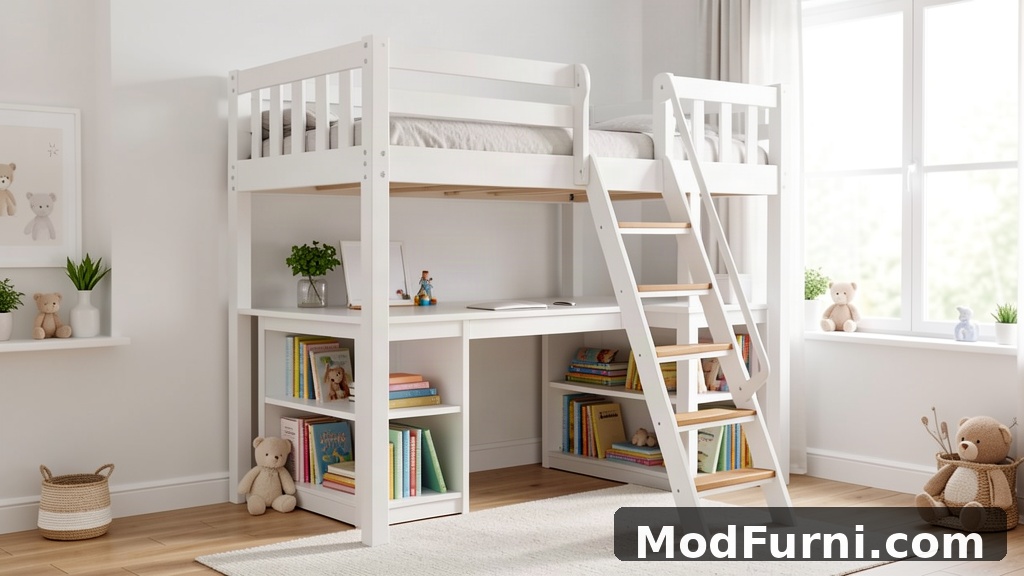
A high loft bed is a raised bed frame that lifts the sleeping surface high enough to create real, usable floor space underneath, usually 48 to 56 inches of clearance for a desk, seating, storage, or play area. Unlike a bunk bed, it has no lower bunk, so the entire footprint stays open. That makes it a smart space-saving solution for kids’ rooms, dorms, and small apartments.
Why pick a high loft bed instead of a regular frame?
The biggest reason is square footage. A standard twin bed frame takes up roughly 29 square feet of floor. Raise it 50 inches and the floor under it becomes a workstation, a reading nook, or a toy corner. In a bedroom that measures 10 by 10 feet, that can mean reclaiming a third of the usable space. For families with two kids sharing a room, or for anyone living in a studio, that trade-off is hard to beat.
High loft beds also give you storage that does not eat into closet space. Many models ship with built-in shelves, drawers, or an attached desk. Some even include a hanging rod so the underside works as a mini closet. You are not just lifting the mattress; you are adding a second room under it.
If you are comparing styles, our twin loft bed guide covers the same space-saving idea in more depth, including weight limits and mattress compatibility.
How tall is a high loft bed?
Most high loft beds stand between 66 and 72 inches tall overall. The clearance underneath, which is the number that actually matters, usually lands between 48 and 56 inches. That is enough room for an adult to sit at a desk without bumping their head, and plenty for a kid to stand up under.
Before you buy, measure your ceiling. A bed that is 72 inches tall needs a ceiling of at least 8 feet to feel comfortable, and you want a couple of inches of breathing room above the mattress for sitting up. If your room has a sloped ceiling, measure the lowest point where the bed will sit.
High loft bed vs. bunk bed vs. low loft bed
The terms get thrown around a lot, so here is the short version.
A bunk bed stacks two mattresses, one above the other, and is meant to sleep two people. A high loft bed holds one mattress and leaves the space below open. A low loft bed, sometimes called a mid loft or junior loft, sits lower, usually with 20 to 35 inches of clearance, and works better for younger kids or low-ceiling rooms.
If you need to sleep two kids in one room, a bunk bed makes sense. Our low bunk bed guide walks through the safe, space-saving options for that setup. If you need one bed plus a desk or play space, a high loft bed is the better call. If your child is under six, a low loft or a standard bed is safer until they are comfortable climbing at night.
Twin vs. full: which size?
Most high loft beds come in twin, and for a kids’ room that is usually the right answer. Twin mattresses measure 38 by 75 inches, which fits standard loft frames without surprises. Full-size high loft beds are rarer but they exist, and they measure 54 by 75 inches. A full loft gives a teen or a taller adult more sleeping room, but the larger footprint eats into the floor space you are trying to save.
Weight capacity is worth checking before you pick a size. Solid wood frames in the $300 to $500 range typically support 175 to 250 pounds. Premium pine builds, like the Max and Lily high loft bed, are rated to 400 pounds, which covers most teens and adults. If the frame is going to be used by a grown adult, aim for at least 300 pounds of rated capacity and check the mattress thickness limit, usually 6 to 8 inches.
Wood, metal, or a mix?
High loft beds are built from solid wood, metal, or a combination of wood and MDF.
Solid pine, especially New Zealand pine, is the premium choice. It is light, strong, and takes a finish well. Beds like the Max and Lily or the Simple loft bed use pine throughout, and the best ones skip the MDF entirely. The tradeoff is price: solid wood high lofts typically run $350 to $600.
Metal loft beds are usually cheaper, often $150 to $300, and they can be very sturdy. Steel frames from brands like Zinus and DHP with full-length guardrails and welded joints hold up fine for kids. The downsides are noise and looks; metal frames can creak if bolts loosen, and they do not have the warmth of wood in a bedroom.
The budget middle ground is pine plus MDF. The frame structure is wood, while shelves, desks, and cabinet panels are engineered wood. That is what most twin loft beds with desks under $400 use, and honestly it is fine for a kids’ room. Just check the weight rating, because MDF components are usually what limit the capacity.
What to look for in a high loft bed
Guardrails. This is the safety feature that matters most. Look for a full-length rail on the wall side and a rail on the open side, at least 14 inches tall measured from the top of the mattress. Some frames only have partial rails, which is fine for the head end but not for the open edge.
The ladder. Angled ladders with anti-slip steps are easier and safer to climb than vertical ones. Check whether the ladder can be mounted on either side, which gives you flexibility in a tight room.
The desk and storage. If the bed comes with a desk, check the desk’s weight capacity and whether the shelves are actually usable or just decorative. A desk rated to 100 pounds or more is a real workstation; one rated to 30 pounds is a shelf. Models with drawers and cabinets underneath add even more function, as we cover in our loft bed with drawers guide.
Slats and box spring. Nearly every high loft bed uses wooden slats, so no box spring is needed. That saves money and keeps the bed lower maintenance. Just confirm the slat count and spacing support your mattress type; foam mattresses need slats no more than about 3 inches apart in some cases, while innerspring mattresses are more forgiving.
Assembly time. Most high loft beds take two adults about 40 minutes to two hours to assemble. Everything comes flat-packed with tools included, which fits the knock-down packaging most online furniture sellers use. Two people really do make a difference on the larger frames.
Noise. Check reviews for creaking complaints. Solid wood frames with metal support bars tend to stay quiet, while all-metal frames sometimes develop squeaks after a few months. A little felt or threadlocker fixes most of it, but it is easier to buy quiet in the first place.
Our top high loft bed picks
Max and Lily High Loft Bed, Twin. The best overall pick. Solid New Zealand pine, a 400-pound weight rating, 14-inch guardrails, and an anti-slip angled ladder that mounts on either side. The under-bed clearance is 51.5 inches, and it is designed for 8-foot ceilings. Expect to pay around $400 to $550. This is the frame to buy if you want something that lasts from kindergarten through high school. Check the latest price on Amazon.
Twin Loft Bed with Desk and Shelves. A solid budget pick in the $300 range. Pine and MDF construction with an attached desk, four shelves, and a full-length guardrail. The weight capacity is 175 pounds, so it is best for kids and younger teens. It ships in three boxes, which can arrive on different days, so do not panic if the first box shows up alone. Check the latest price on Amazon.
Simple Loft Bed, Twin, Grey. A clean, minimalist frame with 52 inches of clearance and a 250-pound weight capacity. Fourteen slats, no box spring needed, and it assembles in about 40 minutes with two people. This one suits older kids and even adults who do not mind a smaller mattress. Check the latest price on Amazon.
MOEO Twin High Loft Bed with Desk and Drawers. The storage king. It packs a desk, two drawers, a cabinet, and four shelves under the bed. The 175-pound capacity and 71.9-inch height make it a strong choice for a kid who needs a full study corner in a small room. Assembly runs closer to an hour, and it ships in three boxes. Check the latest price on Amazon.
How to measure your room before buying
Grab a tape measure and check four things. Ceiling height at the spot where the bed will go. Floor footprint, accounting for the ladder sticking out 12 to 18 inches on one side. Doorway width, because loft bed boxes are long and narrow, and you may need to angle them through. And window placement, so the bed does not block light or the ability to open the sill.
Also measure the mattress you already own, or plan to buy. A high loft bed with a 6-inch mattress limit will not fit a 10-inch pillow-top. When in doubt, buy the mattress after the frame, and pick a thinner one. For more on matching a frame to a mattress, our king bed frame buying guide explains the same measurement logic for larger beds.
Is a high loft bed safe for kids?
Yes, when the frame meets a few basic standards. Federal safety standards for children’s furniture cover things like guardrail height and slat strength, and most well-known brands exceed them. Keep the bed against a wall, leave the ladder clear of toys, and do not hang anything heavy from the frame that could tip it.
The practical rule is that kids under six should probably start on a lower bed, and older kids are fine once they can climb and get down without help at night. Nightlights at the top of the ladder help more than you would think.
Frequently asked questions
Do I need a box spring for a high loft bed?
No. High loft beds use wooden slats that support the mattress directly. A box spring or bunkie board is not required, and most frames are designed to work with foam, hybrid, and innerspring mattresses up to a set thickness.
What mattress thickness works best?
Most frames recommend 6 to 8 inches. Thicker mattresses sit above the guardrail line and reduce the effective rail height, which is a safety concern for kids.
Can adults sleep on a high loft bed?
Yes, as long as the weight capacity is 300 pounds or more and the ceiling is high enough. Full-size high lofts with 400-pound ratings are comfortable for most adults, though climbing a ladder in the middle of the night is not for everyone.
Do high loft beds work in low-ceiling rooms?
They need at least 8-foot ceilings to be comfortable. For lower ceilings, a low loft or mid loft bed with 20 to 35 inches of clearance is the safer choice.
Final thoughts
A high loft bed is one of those purchases that feels like a compromise until you live with it, and then it feels obvious. You trade a few feet of headroom for a desk, storage, and floor space that would not exist otherwise. Pick a solid wood frame with real guardrails, measure your room first, and match the weight capacity to whoever is sleeping on it. The right one will carry a kid from elementary school to graduation, or turn a studio into something that feels like two rooms.